Project · B2B agritech venture
GrainOS
When to hold, when to sell
- Role
- Co-Founder & Operations Lead
- When
- October 2024 to present
- Type
- B2B agritech venture
The problem
After harvest, farmers and godown (warehouse) owners store wheat and wait for a better price. Stored wheat can lose up to a third of its value to humidity, pests and heat, while mandi (local market) prices swing 20 to 40% in a season. Sell too early and they miss the price; hold too long and the grain spoils.
The answer
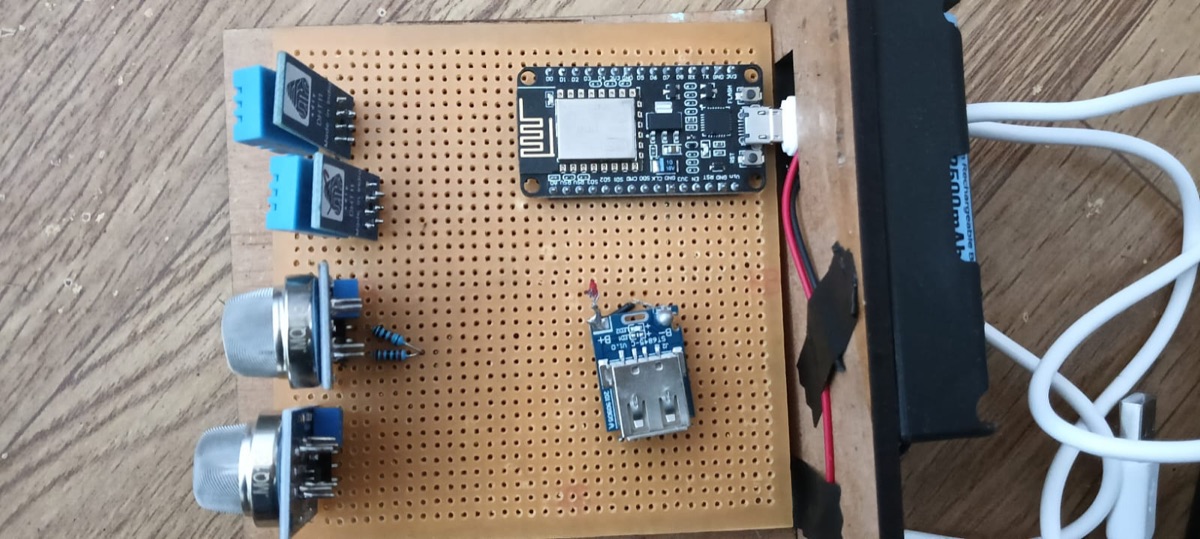
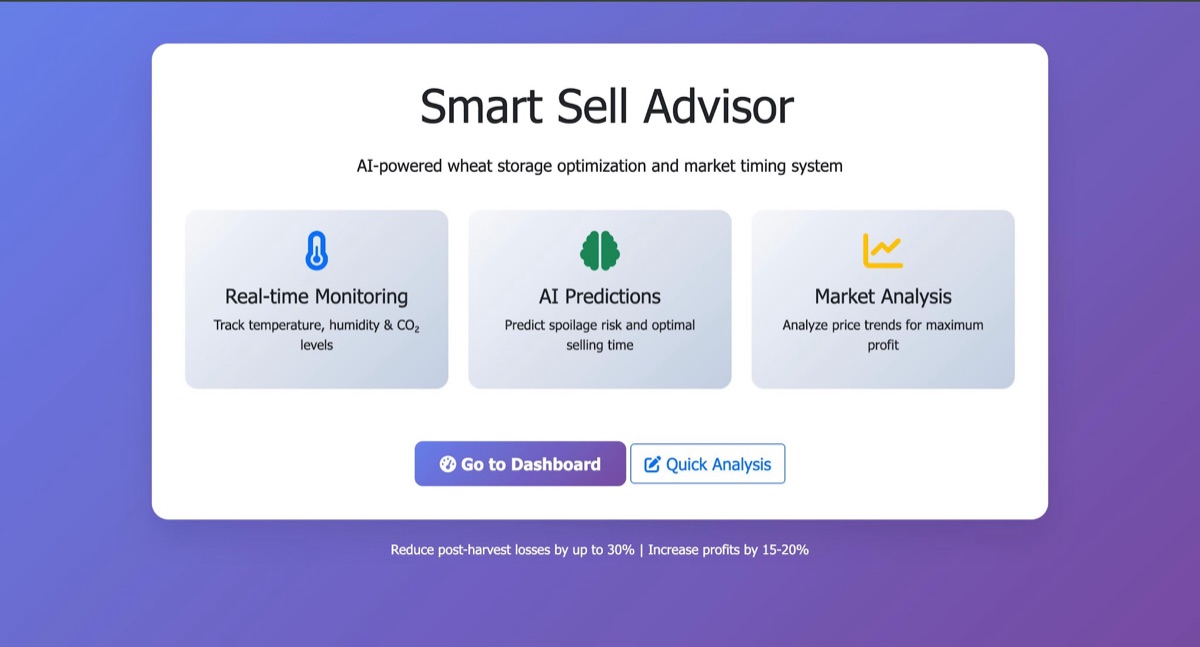
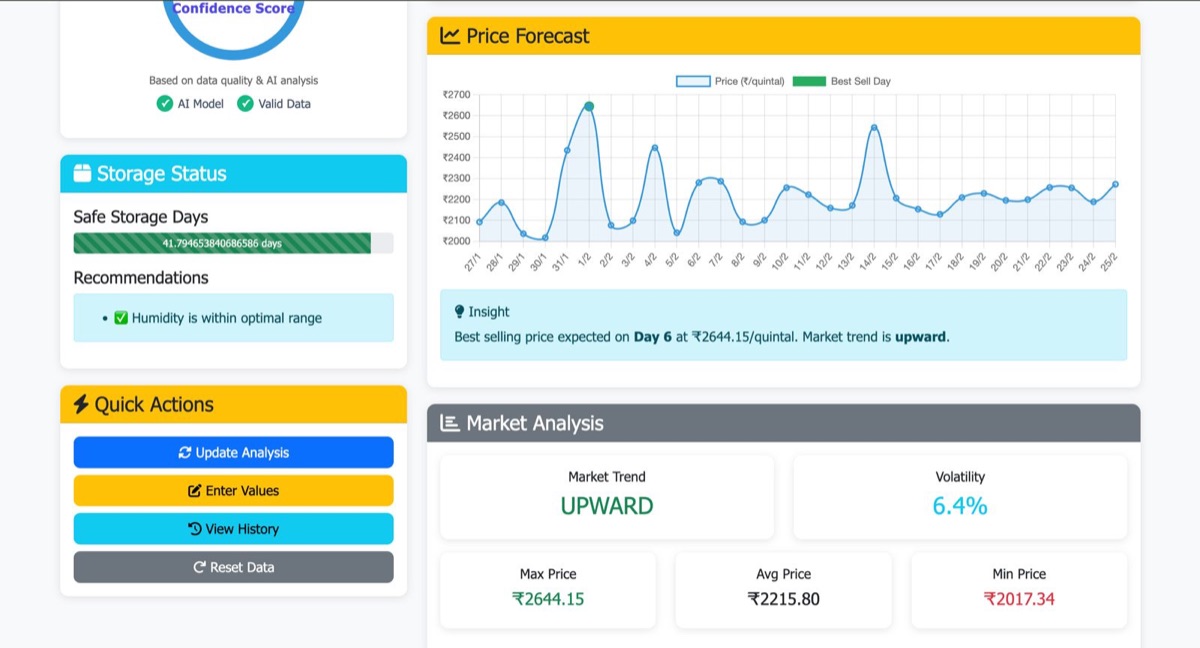
An $18 sensor sits in the grain and tracks temperature, humidity and CO₂. A model turns those readings into the number of safe storage days left, compares that against live mandi prices, and gives a HOLD or SELL call with a confidence score and the best day to sell.
How it works
- 1
Sense
An $18 sensor in the grain logs temperature, humidity and CO₂.
- 2
Predict
A model turns the readings into the safe storage days left.
- 3
Compare
Those days are set against live mandi (market) prices.
- 4
Decide
A HOLD or SELL call, with a confidence score and the best day to sell.
How it started. The team first built an air-quality monitor for Delhi. During AgriBOT field pilots, Naysa kept hearing about grain rotting in storage, so she co-led a pivot to that problem.
What Naysa did. Built the sensor and helped build the model that turns its readings into a hold-or-sell call. As Operations Lead she also co-led the pivot from air quality to grain storage.
Prototype and product
+20%
farmer income in the pilot with a 100-farmer FPO
−28%
spoilage in the same pilot
25+
pre-bookings from godown owners
Recognition
- 1st place, Oxford Founders Entrepreneurship Competition
- 2nd of 13,000, Sparkle Ascend, Udgam 2026, IIT Guwahati
- International Finalist, Diamond Challenge (1 of 70 teams from 4,000)
- Capital One Prosperity Prize ($1,500)
Backing and endorsements
- Grant from a former Vice Chairman of NITI Aayog; deployment talks with the Warehousing Association of India.
- Praised on video by Shark Tank India investor Amit Jain.
- Recommended by IAS officer Neelkamal Darbari, Labour Commissioner and Director of Factories, Punjab.
Contact