Project · Agritech venture
AgriBOT
The right fertiliser dose, field by field
- Role
- Co-Founder & Business Strategist
- When
- June 2024 to present
- Type
- Agritech venture
The problem
Most smallholder farmers fertilise by habit, not by soil test. Lab tests are slow and far away, so farmers over-apply urea and other inputs. That wastes money and degrades the soil.
The answer
A rover that tests the soil in the field and releases the exact fertiliser dose: more where the soil is poor, less where it is rich.
How it works
- 1
Drive
The rover crosses the field and stops at set intervals.
- 2
Probe
A servo arm pushes an NPK probe and a pH-and-moisture sensor into the soil. A reading takes about 25 seconds.
- 3
Decide
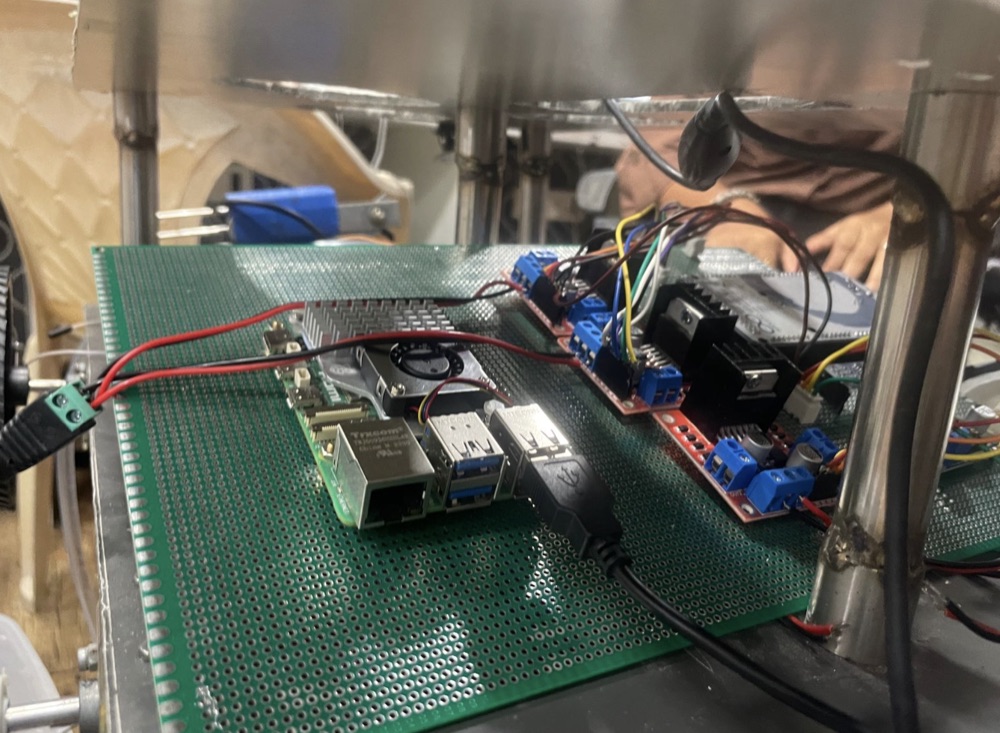
A Raspberry Pi 5 compares the reading with the farmer's crop and soil type.
- 4
Dose
Pumps release a measured dose of urea, SSP and MOP solution in about 15 seconds.
An Arduino Mega drives the motors, pumps and probe, and a camera guides navigation.
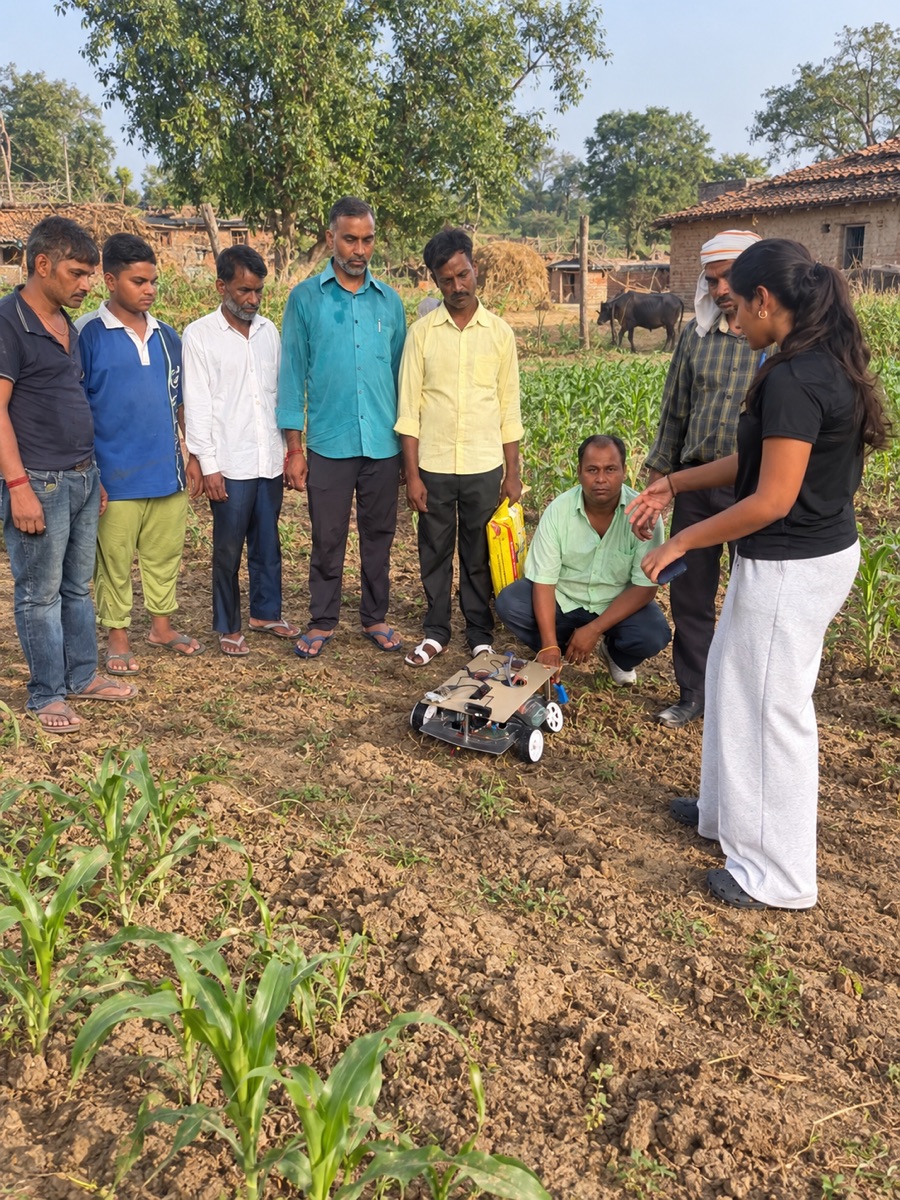
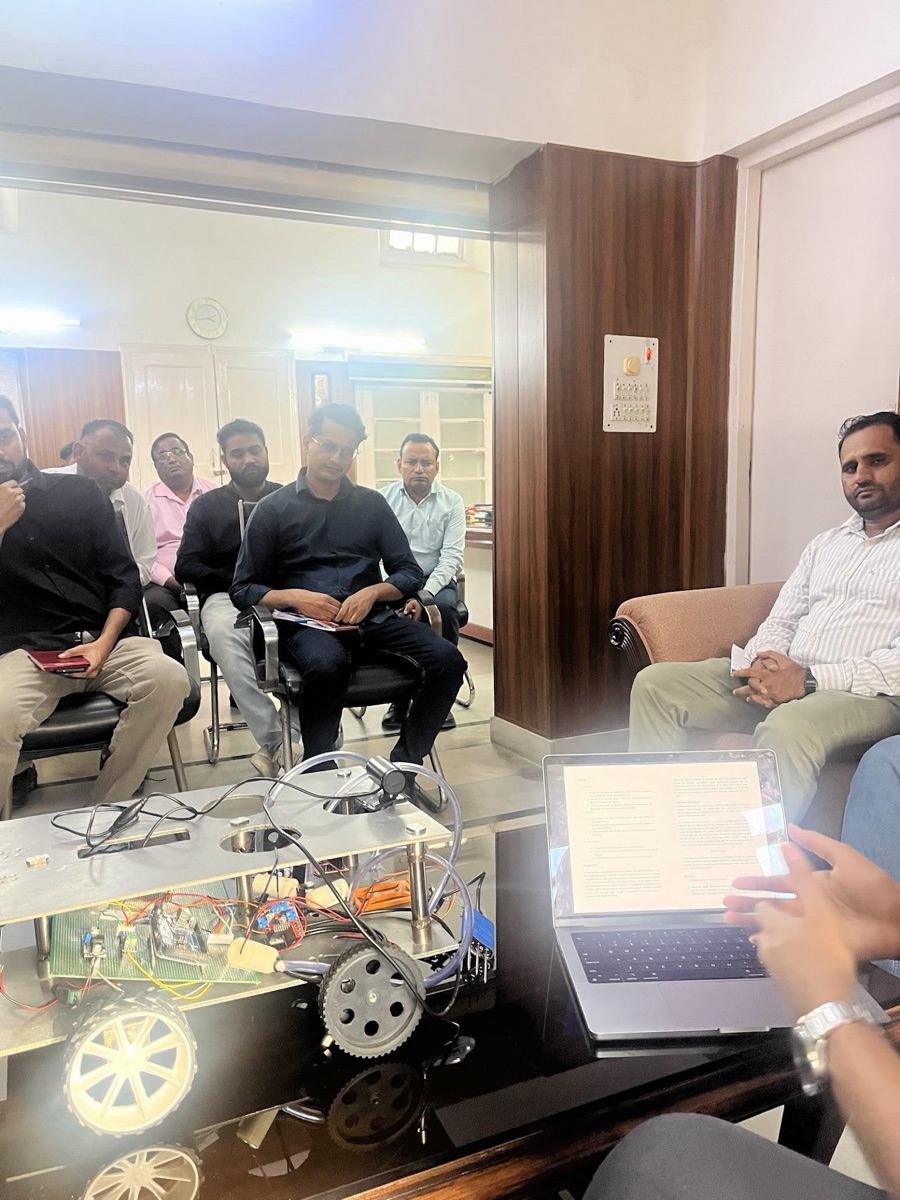
What Naysa did. Turned the prototype into a product small farms could afford, ran the field pilots and farmer workshops, and built the partnership with the Haryana government. Workshops reached 270+ farmers, explaining soil data in terms they could act on.
In the field and inside the rover
95%
agreement with lab soil tests
3,000+
farmers reached across 300 hectares with Haryana's Irrigation Department
−20%
input costs after scaling
Recognition
- Indian design patent
- British Science Association CREST Gold Award (70+ hours of externally reviewed research)
- Top 1% of the Blue Ocean Competition (top 250 of about 23,000)
- Finalist, Sanrakshan, Techfest IIT Bombay (November 2024)
- Featured in India Today
Accuracy up 45% over the first prototype, with ±2 mL dosing precision. Piloted in Rajasthan and Haryana.
Contact